As an Amazon Associate, I earn from qualifying purchases. Some links in this article may earn me a commission at no additional cost to you.
If you have a Goldendoodle, you already know that grooming is part of the commitment. And depending on your dog's coat, it can get expensive.
I've learned quite a bit about grooming from raising Kai and Byrdie. They have the same parents, but their coats are completely different. Kai has thick, tight curls, while Byrdie's coat is much softer and wavier.
For years, I wanted Kai to have that adorable, fluffy teddy bear haircut. What I didn't understand was just how much maintenance his particular coat required to achieve that look.
After plenty of frustration, some disappointing grooming appointments, and more than a few lessons learned the hard way, I finally found a routine that works for us.
The biggest money-saving lesson? You don't necessarily need to groom your Goldendoodle yourself. You need to make professional grooming easier to maintain.
Here are the strategies that have made the biggest difference for Kai and Byrdie.
5 Ways to Save Money on Goldendoodle Grooming
The most practical ways to control grooming costs are:
- Choose a haircut that works with your dog's natural coat.
- Brush and comb regularly to prevent mats.
- Handle simple coat maintenance between grooming appointments.
- Keep your dog's coat clean and properly dried.
- Work with your groomer to establish a realistic maintenance schedule.
These steps won't eliminate professional grooming expenses. But they can help you avoid preventable coat problems, make grooming appointments more manageable, and potentially reduce the need for extra grooming services.
1. Choose a Haircut That's Easier to Maintain
The Haircut That Changed Everything for Kai
This was the single biggest breakthrough in my experience with Goldendoodle grooming.
When Kai was younger, I loved the fluffy teddy bear look. I wanted him to have a longer coat, rounded face, and that soft, cuddly appearance you see in so many Goldendoodle photos.
But Kai's coat is extremely thick and curly.
When his hair grows longer, it doesn't fall softly the way Byrdie's wavy coat does. It grows outward and becomes incredibly dense.
Keeping that longer style meant a lot of brushing and a much greater risk of matting. More than once, I arrived at a grooming appointment hoping for a beautiful fluffy haircut, only to find out that Kai needed to be clipped much shorter because of tangles and mats.
It was frustrating, especially because I thought I was doing everything I could to maintain his coat.
Eventually, I realized I was trying to make Kai's coat look like a completely different type of coat.
Everything changed when I stopped fighting his natural curls.
Today, my favorite haircut for Kai is much shorter:
- Approximately ¼ inch on his body and legs.
- Shorter ears.
- A shorter top of the head.
- A softly rounded face.
It's neat, comfortable, and still gives him plenty of personality.
Most importantly, it's dramatically easier for me to maintain between grooming appointments.
That shorter haircut made a 100% difference in our routine.
Why Your Goldendoodle's Coat Type Matters
Not all Goldendoodles have the same grooming needs.
Kai's tightly curled coat behaves very differently from Byrdie's looser waves. A haircut that's relatively easy to maintain on one dog may require significantly more work on another.
Think about the difference between extremely thick, curly human hair and naturally straight hair. The same haircut won't behave identically on both.
That's why I recommend discussing your dog's coat texture, preferred haircut, and realistic brushing routine with your groomer.
If you love the longer teddy bear look, there's nothing wrong with that. Just understand the maintenance it may require.
And if you're struggling to keep up, a shorter haircut might be the simplest solution.
2. Brush and Comb Regularly to Prevent Matting
This is the foundation of at-home Goldendoodle grooming.
Mats aren't just a cosmetic problem. Tight matting can pull on the skin, cause discomfort, trap moisture, and make professional grooming more complicated.
I learned this firsthand with Kai.
A coat can look fluffy on the outside while tangles are forming underneath, especially around areas that experience friction.
Pay particular attention to:
- Behind the ears.
- Under the collar or harness.
- Under the front legs.
- Around the legs and paws.
- Areas where your dog regularly lies or rubs against something.
The Two Grooming Tools I'd Start With
A good slicker brush
For Goldendoodles with longer or denser coats, a quality slicker brush can make brushing more effective.
I've used slicker brushes with Kai and Byrdie since they were young. They gradually became accustomed to brushing and learned to enjoy the attention.
The Chris Christensen Big G is one of the brushes I recommend, particularly for coats that require more thorough maintenance.
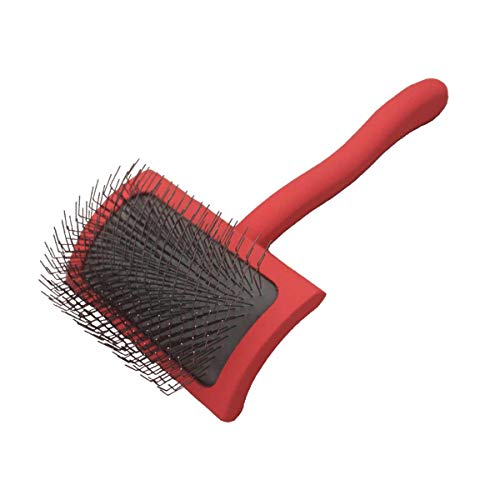
The Paw Brothers Professional Grade Extra Long Slicker Brush is another option discussed in my grooming recommendations.
A metal grooming comb
A slicker brush helps work through the coat, but a metal comb is useful for checking whether you've reached through the hair rather than simply brushing over the surface.
Gently comb through small sections after brushing. If the comb catches, there may still be tangles that need attention.
Never force a comb through a tight mat or pull against your dog's skin.
How Often Should You Brush a Goldendoodle?
There's no single brushing schedule that works for every Goldendoodle.
The right frequency depends on coat type, length, activity level, and how easily tangles develop.
A longer, tightly curled coat may need daily attention. A shorter haircut may be considerably easier to maintain.
I started brushing Kai and Byrdie a few times a week when they were puppies. As I've learned more about their different coats, I've adjusted my approach to what each dog needs.
My advice: Check the coat regularly and brush as often as necessary to prevent tangles from developing. Don't rely on a fixed schedule if your dog's coat is telling you it needs more attention.
For more detailed guidance, read my How to Prevent Mats in Goldendoodles and Best Brushes for Goldendoodles by Coat Type.
3. Learn Which Grooming Tasks You Can Do at Home
You don't have to learn how to give your Goldendoodle a complete haircut to save money on grooming.
In fact, I prefer to let our professional groomer establish the overall shape of Kai and Byrdie's haircuts.
That gives me a good starting point for maintaining their coats at home.
What I Do Between Grooming Appointments
My routine focuses on simple maintenance:
- Brushing and checking for tangles.
- Keeping their coats clean.
- Paying attention to areas that mat easily.
- Doing minor coat touch-ups when appropriate and safe.
- Checking their ears, paws, and nails for anything that needs attention.
Our groomer handles the complete haircut, bath, and nail trim during regular appointments.
This combination has worked well for us because I'm not trying to replace the groomer. I'm trying to maintain the work she's already done.
What I'd Leave to a Professional
Some grooming tasks are more difficult—and riskier—than they appear.
I'd recommend professional help for:
- Removing tight mats close to the skin.
- Trimming around the eyes when a dog won't remain still.
- Cutting hair around sensitive areas.
- Using clippers or scissors when you're not confident handling them.
- Nail trimming if you aren't comfortable identifying the quick.
- Any grooming procedure that causes pain, distress, or requires restraint beyond your skill level.
Even rounded-tip grooming scissors can cause injuries, especially around a dog's face or when the dog moves unexpectedly.
If you want to learn more advanced at-home grooming, get hands-on instruction from a qualified professional before attempting it yourself.
Saving money isn't worth risking an injury to your dog.
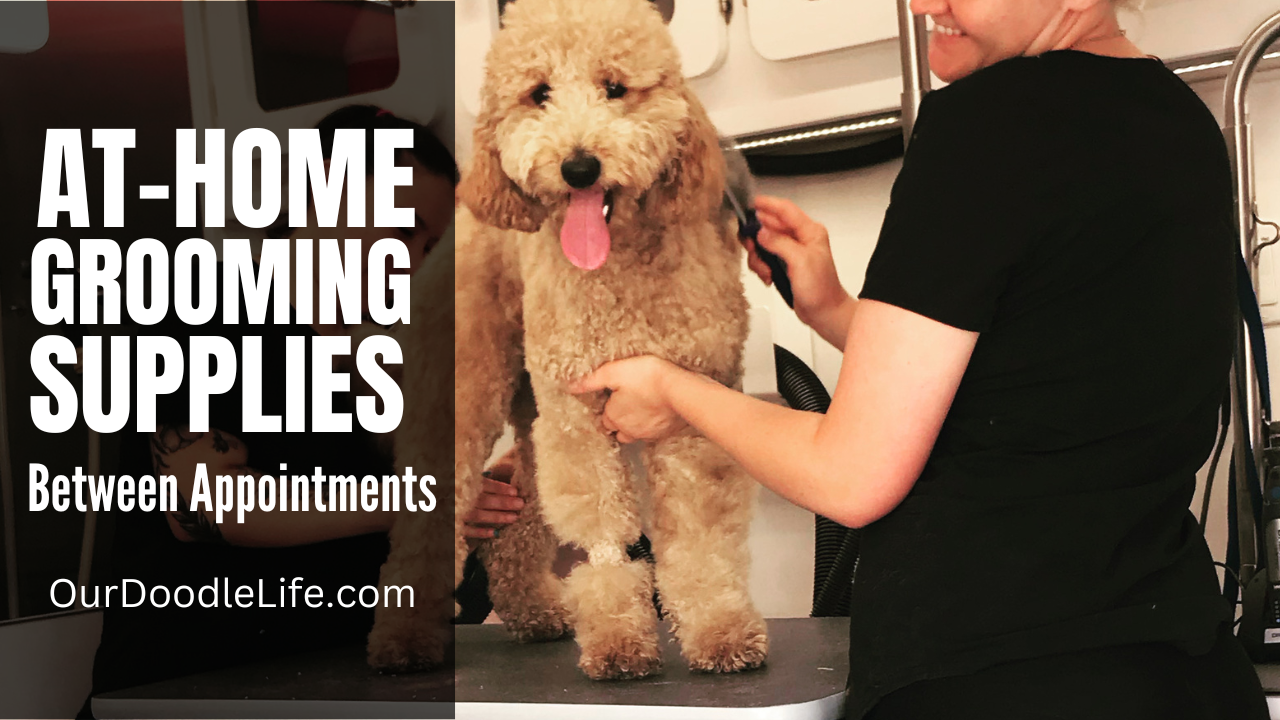
If you're thinking of doing your own grooming at home, this video lists the supplies you'll need to get started.
4. Keep Your Goldendoodle's Coat Clean and Properly Dried
One thing I've learned from Kai and Byrdie is that water changes everything when it comes to grooming.
We enjoy taking the dogs to the beach, but afterward their coats need extra attention.
Sand, salt water, and moisture can make coat maintenance more challenging, especially with Kai's thick curls.
What I Do After Beach Days and Baths
After they've been swimming or playing at the beach, I pay attention to removing sand and salt residue, cleaning their coats as needed, and making sure they dry thoroughly.
A damp, dense coat can develop tangles, and moisture trapped close to the skin can contribute to skin problems.
If you bathe your Goldendoodle at home:
- Brush out manageable tangles before bathing.
- Use a shampoo formulated for dogs.
- Rinse thoroughly.
- Dry the coat carefully, using an appropriate low-heat or no-heat setting.
- Check the coat with a brush and comb as you dry, without pulling at tangles.
Avoid applying high heat directly to the skin, and don't leave a thick coat damp underneath.
If your dog has tight matting, don't attempt to brush or bathe it out without professional guidance.
Do Detangling Sprays Help?
I've used BioSilk for Dogs detangling spray as part of our coat-care routine.
I was already familiar with the BioSilk name because I'd used the human hair-care products myself for years.
I like the dog detangling spray because it helps with manageable tangles, adds shine, and smells good.

A detangling spray can make routine brushing easier, but it isn't a solution for severe matting.
5. Work With Your Groomer Instead of Trying to Replace One
One of the best things I did was ask our groomer for advice about maintaining Kai and Byrdie between appointments.
A good groomer can tell you which areas need more attention, whether your preferred haircut is realistic, and what you can do at home to keep the coat in good condition.
We generally schedule professional grooming about every six weeks.
I've sometimes been able to stretch the time between appointments when their coats are in good condition, but I don't treat that as the goal at all costs.
The right schedule depends on the dog, the haircut, and how well the coat is being maintained.
Questions Worth Asking Your Groomer
At your next appointment, ask:
- What haircut length would be easiest to maintain with my dog's coat?
- Which areas are starting to tangle between appointments?
- How often should I brush and comb?
- Which maintenance tasks can I safely do at home?
- How often should my dog return for professional grooming?
- Are there any extra services or charges I could avoid through better routine maintenance?
The goal is to develop a routine that works for your dog and your budget.
Can You Really Save Money by Grooming at Home?
Potentially, yes—but not always in the way people expect.
Buying professional grooming equipment and attempting full haircuts at home can involve significant upfront costs, practice, and time.
For me, the bigger benefit has come from choosing an easier-to-maintain haircut and keeping up with basic coat care between professional appointments. That approach helps me manage the grooming process without taking on tasks I'd rather leave to someone with more experience.
Grooming Products I Wouldn't Rush to Buy
It's tempting to purchase every tool you see recommended online.
But having more grooming equipment doesn't necessarily mean better grooming.
For example, I wouldn't recommend buying a general-purpose deshedding blade as your primary tool for maintaining a tightly curled Goldendoodle coat.
Tools designed to remove loose hair from shedding coats aren't automatically appropriate for dense, curly coats. Some can damage the coat or irritate the skin when used incorrectly.
I also wouldn't rush to buy a full collection of scissors, clippers, or dematting blades without learning how to use them safely.
Start with the basics: an appropriate brush, a metal comb, and any dog-safe coat-care products that genuinely help your routine. You can always add equipment as you gain experience. For the tools I reach for most, browse The Floof Edit.
Frequently Asked Questions About Saving Money on Goldendoodle Grooming
Frequently Asked Questions
- How can I reduce the cost of professional Goldendoodle grooming? Regular brushing, preventing mats, choosing a manageable haircut, and maintaining your dog's coat between appointments may help reduce avoidable grooming complications and additional services. Ask your groomer which maintenance tasks would make the biggest difference for your dog.
- Is it cheaper to groom a Goldendoodle at home? It can be, but full grooming requires equipment, time, training, and safe handling skills. For many owners, maintaining the coat at home while using a professional for complete haircuts is a practical middle ground.
- How often should a Goldendoodle be professionally groomed? Many Goldendoodles benefit from professional grooming approximately every four to eight weeks, but the right interval varies with coat type, haircut length, activity level, and at-home care. Your groomer can recommend an appropriate schedule.
- What is the easiest Goldendoodle haircut to maintain? A shorter haircut is generally easier to brush and maintain than a long, fluffy style, particularly for thick, tightly curled coats. For Kai, keeping his body and legs around ¼ inch has made a dramatic difference. The best length for your dog depends on their coat and individual needs.
- Can I prevent Goldendoodle mats without daily brushing? Some dogs with shorter or less tangle-prone coats may not need daily brushing. Others, particularly those with longer, dense curls, may need daily attention. Regularly check the coat with a comb and adjust the routine before tangles become mats.
The Biggest Lesson I've Learned About Goldendoodle Grooming
If I could go back and give myself one piece of advice when Kai was a puppy, it would be this:
Learn what your dog's coat naturally wants to do before deciding what you want the haircut to look like.
I spent a long time trying to achieve a style that was much harder to maintain than I realized.
Once I understood Kai's curls and found a haircut that worked with them, grooming became so much easier.
Byrdie has a different coat, so her routine doesn't have to look exactly like his.
That's the beauty—and sometimes the challenge—of Goldendoodles. No two coats are quite alike.
You don't need a cabinet full of grooming products or the skills of a professional groomer. You need the right tools, a realistic routine, and a haircut you can maintain.
Want More Help?
A More Complete At-Home Grooming Routine
If you're ready to build a grooming routine that works for your dog's coat, take a look at Pretty Doodle, my guide to caring for your Goldendoodle between grooming appointments.
And if matting is your biggest challenge, start with my Goldendoodle Mat Prevention Guide.
Explore Pretty DoodleSandra, Kai + Byrdie