
Affiliate disclosure: As an Amazon Associate, I earn from qualifying purchases. Some links in this article may earn me a commission at no additional cost to you.
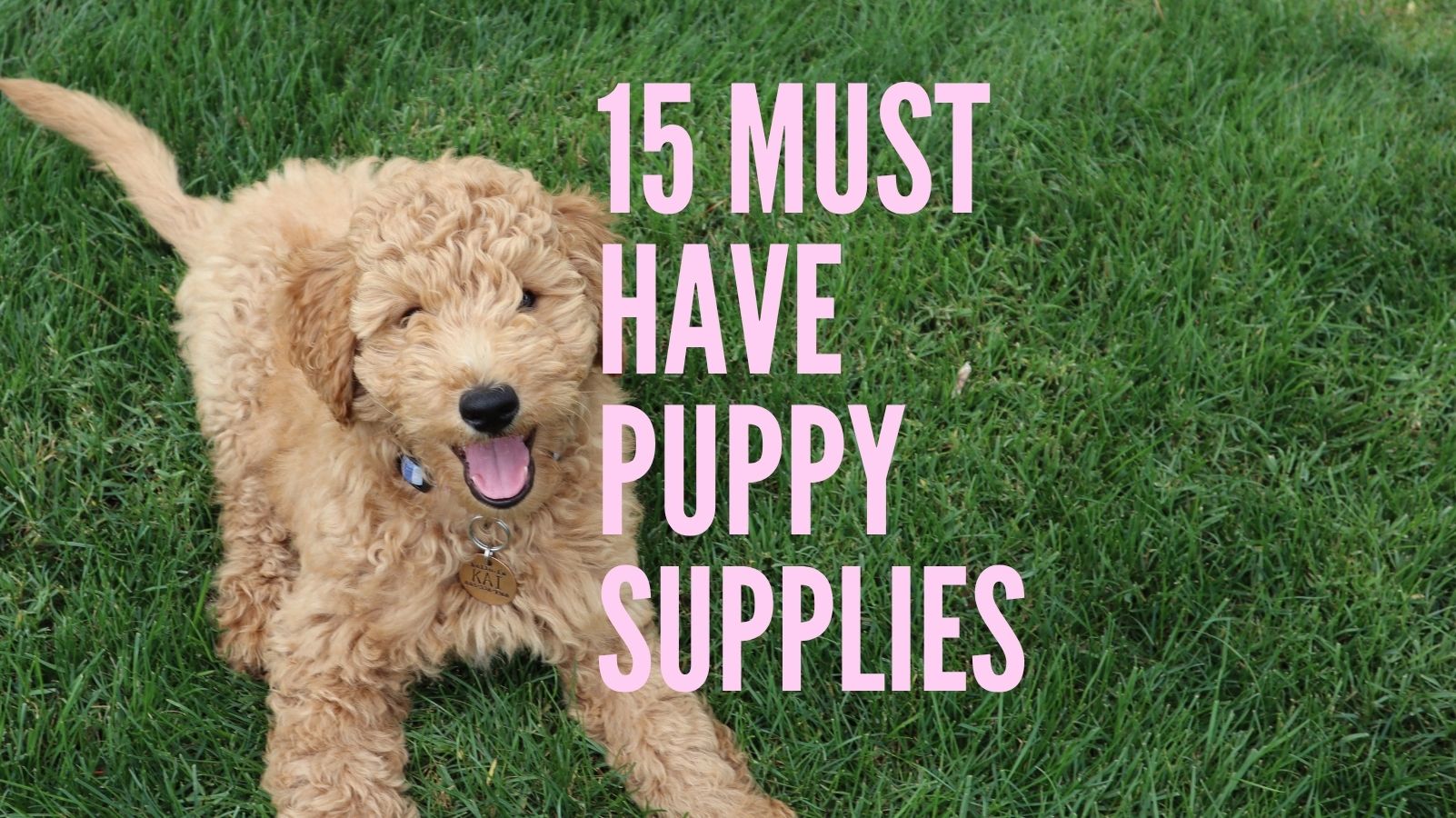
Bringing home a Goldendoodle puppy is exciting. It's also amazing how much stuff one little puppy can need!
When we brought Kai home, I wanted to have everything ready. Then, when Byrdie joined our family, I had the advantage of knowing which supplies we'd actually used, what made puppy life easier, and what we could have done without.
Kai and Byrdie have the same parents, but their personalities couldn't be more different. That was a good reminder that even when you've raised a puppy before, the next one can surprise you.
The good news? You don't need to buy every puppy product you see.
These are the 15 supplies I'd put on my shopping list before bringing home a Goldendoodle, along with a few optional extras that made a difference for us.
Some recommendations come directly from my experience with Kai and Byrdie. Others are practical essentials to consider based on your puppy's needs.
Your Goldendoodle Puppy Shopping Checklist
Here's the quick version you can use while shopping.
Everyday essentials
Optional comfort item
You don't necessarily need every optional accessory right away. Start with the basics and add products as you discover what works for your puppy.
1. A Puppy Crate That Can Grow With Your Goldendoodle
A crate can provide a comfortable resting place and help you establish a predictable routine.
Crate training was one of the more challenging parts of bringing Kai home. He wanted to be with us, and hearing him cry in his crate was difficult.
When Byrdie arrived, I thought we might have an easier time because we'd already been through it. Not exactly! She howled when we first started crate training, too.
We worked on helping both dogs become comfortable with their crates gradually.
What I'd look for: A sturdy crate with enough room for your puppy to stand, turn around, and lie down comfortably. An adjustable divider can be useful as a puppy grows.
Don't assume that a larger crate is automatically better for house-training, and don't use the crate as punishment.
Crate training should be gradual and positive. If your puppy shows persistent distress, seek guidance from a qualified trainer or veterinarian rather than simply leaving them to cry.
Watch Byrdie go from howling to settling calmly in her crate.
2. Comfortable, Washable Crate Bedding
Puppies have accidents, so washable bedding is especially helpful.
Choose something appropriate for your puppy's chewing habits. Some puppies are perfectly happy with a soft crate pad, while others may chew or destroy bedding.
If your puppy tends to swallow fabric or stuffing, avoid leaving unsuitable bedding in the crate.
My advice: Prioritize something easy to clean over something expensive.
3. Puppy Food Appropriate for Their Growth
Before bringing your puppy home, ask the breeder or rescue what food they're currently eating.
A sudden food change can upset a puppy's stomach, so discuss any transition with your veterinarian and make changes gradually when appropriate.
Look for a complete and balanced food formulated for growth and appropriate for your puppy's expected adult size.
Because Goldendoodles can range from relatively small to quite large, the right food may depend on the individual puppy.
I wouldn't choose food based solely on marketing claims, ingredients that sound appealing to people, or whether it's labeled grain-free.
My advice: Your veterinarian is a better resource for choosing puppy food than a list of trending brands.
4. Food and Water Bowls
You don't need fancy bowls to get started.
Choose sturdy, easy-to-clean bowls that are appropriately sized for your puppy.
I originally purchased hammered copper bowls because I liked how they looked. But the important things are that your puppy can eat and drink comfortably and that the bowls are easy to keep clean.
Stainless steel is a practical option.
5. An Adjustable Collar and ID Tag
Your puppy will grow quickly, so an adjustable collar is useful.
Check the fit frequently and make sure it isn't becoming too tight.
An ID tag with your contact information provides another way for someone to reach you if your puppy gets lost.
Microchipping is also important, but an ID tag is still useful even when a puppy is microchipped.
My advice: Keep collars and tags appropriately fitted, and remove equipment when necessary to prevent snagging or other hazards during unsupervised activities.
6. A Standard 4–6-Foot Leash
For everyday outings and basic leash training, I would start with a standard leash.
We also used a longer training leash with our dogs, but a long leash isn't necessary for every new puppy owner.
A shorter leash is generally easier to manage in busy areas and when you're first teaching your puppy to walk with you.
A long line can be a useful addition later for supervised training in an appropriate open space.
Watch Byrdie learning to walk on a long training leash.
7. A Comfortable Puppy Harness
A well-fitting harness is another useful option for walks and training.
Goldendoodle puppies can grow quickly, so check the fit regularly.
Look for a harness that allows comfortable movement without rubbing or restricting the shoulders.
A harness doesn't automatically stop pulling. Your puppy will still need patient, reward-based leash training.
8. Small, Soft Training Treats
The first few weeks with a puppy involve lots of teaching.
You're helping them learn their name, where to go potty, how to come when called, and what behavior earns a reward.
Small, soft training treats are convenient because you can reward your puppy quickly without interrupting a training session for too long.
Choose treats appropriate for your puppy's age and size, and account for treats in their overall daily food intake.
Sometimes regular puppy kibble works perfectly well as a training reward, too.
9. Puppy-Safe Chew Toys
Puppies explore the world with their mouths.
Having appropriate chew toys available can help redirect chewing away from shoes, furniture, and other things you don't want them getting into.
We bought soft toys for Kai and Byrdie, and both enjoyed having toys to play with.
I would choose a small variety rather than buying a huge collection before you know your puppy's preferences.
Safety matters: Select toys appropriate for your puppy's size and chewing style. Supervise chewing, inspect toys for damage, and remove anything that begins breaking apart.
Hard chews, including some bones and antlers, can damage teeth. Edible chews also require care because pieces can become choking or obstruction hazards.
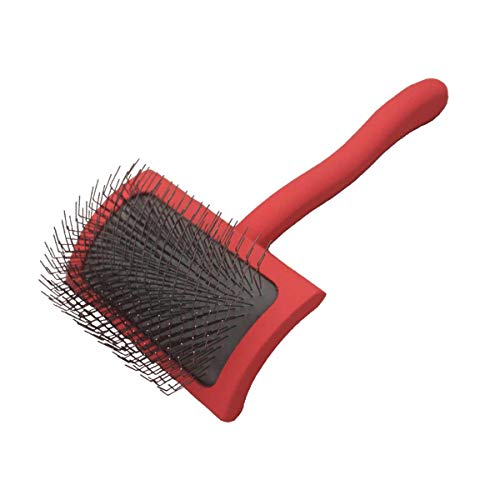
10. A Slicker Brush for Goldendoodle Grooming
This is one item I would absolutely include on a Goldendoodle-specific puppy shopping list.
When Kai was young, I didn't fully appreciate how much work his adult curly coat would eventually require.
His coat became extremely thick and tightly curled. I loved the fluffy look, but keeping it longer meant more brushing and much more attention to tangles.
I learned that lesson the hard way through grooming appointments that ended with shorter haircuts than I'd hoped for.
Byrdie's coat is different. Her waves are looser, and her grooming needs aren't identical to Kai's.
Start getting your puppy comfortable with gentle grooming early, even before their adult coat comes in.
Choose a brush suited to your puppy's coat and size, and introduce it gradually with positive reinforcement.
For more detail, read my Best Brushes for Goldendoodles by Coat Type.
11. A Stainless-Steel Grooming Comb
A brush and a comb serve different purposes.
A slicker brush can help work through the coat, while a metal comb helps you check whether tangles remain closer to the skin.
That's especially important with curly Goldendoodles.
A coat can look fluffy and brushed on the outside while still developing tangles underneath.
I wish I'd understood this much earlier with Kai.
Be gentle and never force a comb through a tight mat. If the coat is painfully tangled, a professional groomer can help determine the safest solution.
You can read more in my Guide to Preventing Mats in Goldendoodles.

12. Enzymatic Cleaner for Puppy Accidents
House-training accidents happen, even when you're doing everything right.
An enzymatic cleaner formulated for pet accidents can help remove organic residue and odors.
Follow the product directions and make sure the cleaner is appropriate for the surface you're treating.
My advice: Buy this before your puppy comes home. It's much more convenient than discovering you need it after an accident.
13. Poop Bags and a Dispenser
Not the most exciting purchase, but definitely one of the most useful.
Keep poop bags near the door, in your car, and with your walking supplies.
A small dispenser attached to your leash can make everyday outings easier.
14. A Baby Gate or Puppy Exercise Pen
One of the easiest ways to make puppy life less stressful is to manage where your puppy can go.
A baby gate or exercise pen can help create a supervised, puppy-safe area while you're teaching house rules.
We found that establishing a routine made a big difference when raising Kai and Byrdie.
The goal isn't to keep a puppy confined all day. It's to provide appropriate supervision, rest, play, and gradual freedom as they learn.
Choose a gate or pen appropriate for your puppy's size and abilities, and make sure they can't climb, tip, or become trapped in it.
15. A Heartbeat Puppy Toy — My Favorite Optional Extra
This one isn't essential, but it deserves a place on my list because of our experience with Kai and Byrdie.
When we picked up our puppies, I brought along a towel that had picked up the scent of their mother and littermates.
I hoped having something familiar would make the transition easier.
I also discovered a plush puppy toy with a simulated heartbeat.
Kai absolutely loved his Snuggle Puppy. When I bought another one for Byrdie, Kai even tried to claim hers!
Of course, not every puppy will respond the same way, and a comfort toy isn't a substitute for patient training or appropriate care.
But for us, it was one of those purchases that felt worthwhile.
Watch Kai with his Snuggle Puppy heartbeat toy.
Choose a toy appropriate for your puppy and supervise its use, especially if your puppy tends to chew or swallow toy components.
What You Can Wait to Buy
It's easy to get carried away when shopping for a new puppy.
Here are a few things I wouldn't rush to purchase:
A travel crate: Useful if you travel regularly, but not every puppy needs a separate travel crate immediately. For car journeys, use an appropriate travel restraint or carrier rather than assuming a soft crate is crash-tested.
A 15-foot training leash: Helpful for certain supervised training activities, but a standard leash is a better starting point for most everyday outings.
A carrier sling: We used one when introducing our puppies to new sights and sounds before they were ready to walk in some public environments. It's optional, and it needs to be appropriate for your puppy's size and used safely.
An elaborate toy collection: Start with a few appropriate toys and discover what your puppy actually likes.
Premium food-storage containers: Convenient, but you can often start by keeping food in its original bag inside a clean, secure container, following the manufacturer's storage directions.
Your First Week
Having the right supplies matters, but those first few days are really about helping your puppy settle in. Here's what made the biggest difference for us.
Start a potty schedule immediately. Take your puppy outside regularly throughout the day and give them plenty of chances to succeed. A predictable routine helps them learn faster than you might expect.
Keep nighttime simple. We kept the crate in our bedroom so the puppy felt secure. Kai cried and Byrdie howled at first, but a Snuggle Puppy heartbeat toy helped both settle quickly.
Establish a daily rhythm. Meals, potty breaks, short play sessions, quiet time, and naps — a simple repeating schedule helps a puppy know what to expect and makes it easier to tell when they need something.
Introduce training gently. Focus on a few basics: getting comfortable with a collar, learning their name, short positive leash introductions, and rewarding calm behavior. Keep sessions short and enjoyable.
Pay attention to personality. Kai was cautious; Byrdie was bold and independent. Getting to know your puppy's individual personality helps you create routines that fit the dog you actually have.
For a step-by-step look at those first days, read my Six Tips for Your Goldendoodle’s First Week.
Establishing a Routine Matters More Than Buying More Stuff
The biggest lesson I've learned from raising Kai and Byrdie is that supplies help, but consistency makes the difference.
Those first few weeks involve potty breaks, naps, feeding, supervised play, gentle training, and lots of patience.
Kai and Byrdie had different personalities and reacted differently to some experiences. What worked immediately for one sometimes took more time with the other.
Having a few reliable essentials made those early days easier, but no product replaced the time we spent helping them settle in.
For more help, read my Six Tips for Your Goldendoodle's First Week.
Frequently Asked Questions
What should I buy before bringing home a Goldendoodle puppy?
Start with an appropriate crate or resting area, puppy food, food and water bowls, identification, a leash, training treats, safe toys, cleaning supplies, and a way to manage your puppy's space. Goldendoodle owners should also have basic grooming tools.
Do Goldendoodle puppies need a special brush?
Goldendoodle coats vary. A suitable slicker brush and metal comb are useful tools, but the right grooming routine depends on your puppy's coat. Begin with gentle handling and short, positive grooming sessions.
Do I need both a collar and a harness?
A properly fitted collar with identification is useful, and many owners also use a harness for walks. The best setup depends on your puppy's size, comfort, and training needs.
Do I need two dog crates?
Usually not. Many owners begin with one appropriately sized crate, sometimes using an adjustable divider. A separate travel crate is optional and depends on your travel needs.
What can I skip when buying puppy supplies?
You can often wait on specialty bowls, extra crates, long training leashes, large toy collections, and premium storage accessories. Focus on safe, practical basics first.
Ready for Your New Goldendoodle?
You don't have to figure everything out at once.
Start with the essentials, establish a simple routine, and get to know your puppy. You'll quickly discover which products make your everyday life easier.
If you'd like more help with grooming, puppy care, and the practical details of living with a Goldendoodle, explore the Complete Doodle Dog Starter Kit.
And for a step-by-step look at those first days at home, read my first-week guide.
Here's to a wonderful start with your new best friend!
Sandra, Kai + Byrdie