
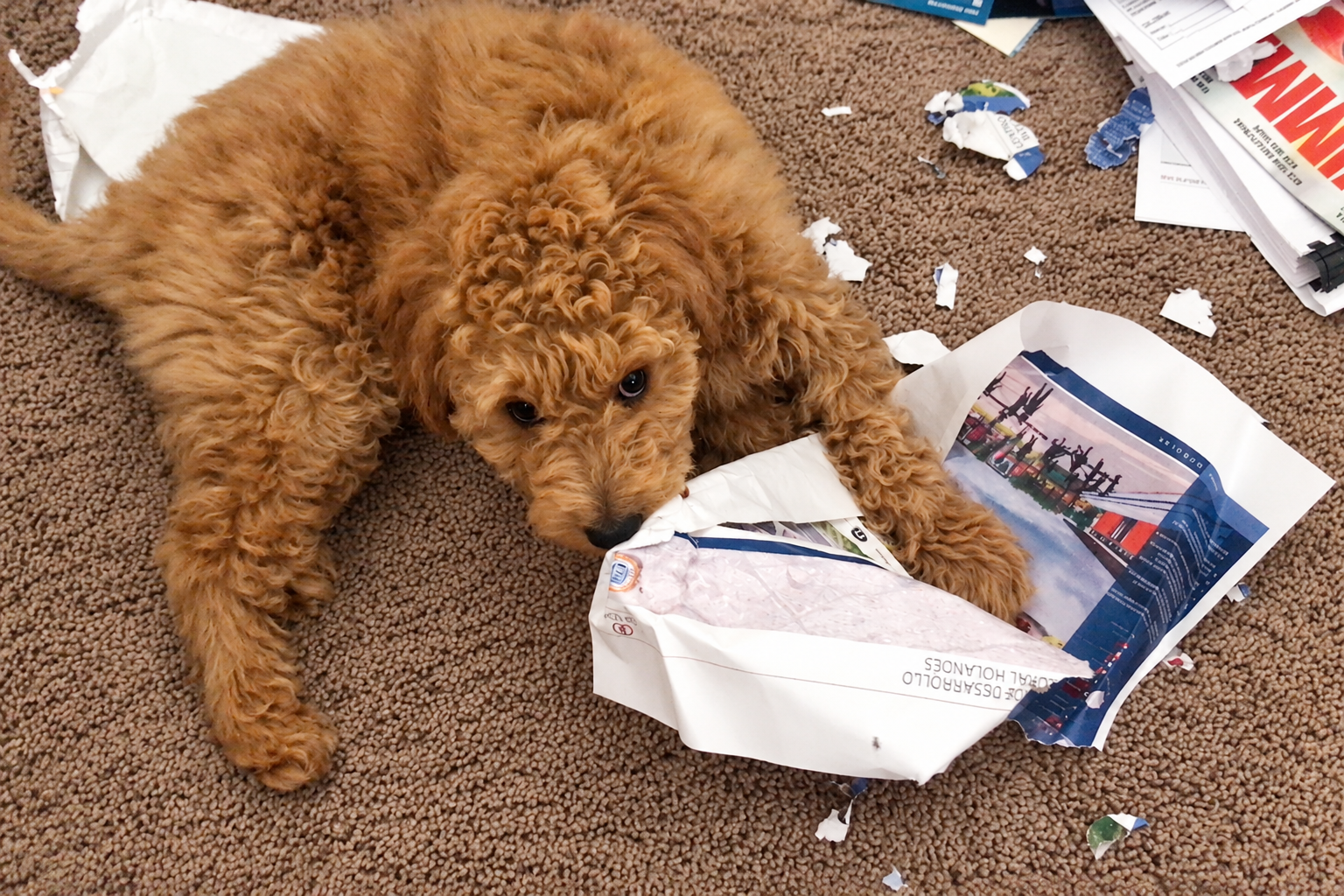
Those adorable little Goldendoodle puppies come with something you might not be expecting: surprisingly sharp teeth.
One minute, you're enjoying puppy cuddles. The next, your puppy is chewing on your fingers, grabbing your pant legs, or running off with a shoe.
When we brought Kai home, and later Byrdie, puppy biting and chewing were among the first challenges we had to deal with.
The good news? Puppy biting is normal, and there are practical ways to manage it while your Goldendoodle learns better habits.
The key is to redirect biting onto appropriate toys, prevent access to things your puppy shouldn't chew, recognize when they're overtired, and consistently reward the behavior you want.
Here's what helps.
 Save
Why Do Goldendoodle Puppies Bite and Chew?
Puppies explore their surroundings with their mouths. Just as babies reach for objects with their hands, puppies investigate things by sniffing, licking, and chewing.
There are several reasons your Goldendoodle might seem determined to bite everything in sight.
- They're exploring. Your hands, shoes, furniture, and clothing are all interesting to a curious puppy.
- They're teething. As baby teeth loosen and adult teeth develop, chewing can help relieve discomfort.
- They're playing. Puppies naturally mouth and wrestle with their littermates. They need time to learn that human skin is much more sensitive.
- They're overtired or overstimulated. Sometimes the puppy who suddenly seems wild and impossible to settle simply needs some quiet time.
- They've discovered that biting gets attention. Even pushing a puppy away or waving your hands can turn into an exciting game.
Understanding the reason behind the behavior makes it easier to respond appropriately.
1. Redirect Biting to Something Your Puppy Can Chew
One of the simplest things you can do is teach your puppy what they're allowed to bite.
Instead of waiting until your puppy has your hand in their mouth, keep a few appropriate toys within reach.
When your puppy starts mouthing your fingers or clothing:
- Stop moving your hands or feet.
- Calmly offer an appropriate chew toy.
- Encourage your puppy to engage with the toy instead.
- Praise them when they choose it.
Consistency matters. Your puppy won't understand the difference between chewing your fingers and chewing a toy immediately.
You're helping them learn through repetition.
Keep Toys Where You Need Them
It helps to have a few puppy-safe toys in the rooms where your family spends the most time.
That way, when your puppy decides your sweater sleeve looks interesting, you have something appropriate to offer right away.
Try rotating toys occasionally rather than leaving every toy out all the time. A familiar toy can become interesting again when it hasn't been available for a few days.
2. Teach Your Puppy That Biting Ends Playtime
Puppies also need to learn how to play gently with people.
This is often called bite inhibition—learning to control the pressure of their mouth.
If your puppy bites too hard during play, stop the interaction briefly.
You can try saying a calm "Ouch" and becoming still. If your puppy backs away, redirect them to a toy and praise that choice.
Some puppies, however, become even more excited when people squeal or yelp. If that happens, skip the sound altogether.
Instead:
- Stop moving.
- Calmly disengage.
- If necessary, step away behind a baby gate for a brief moment.
- Resume play when your puppy is calmer.
The message is simple: gentle play continues, but biting people makes the fun stop.
Avoid turning this into a punishment or confrontation. Your puppy is still learning.
Be Consistent With Everyone in the Family
One person encouraging rough hand play while another tries to discourage biting can be confusing for a puppy.
Ask family members and visitors to follow the same basic approach.
And while puppy nipping may seem harmless at first, it's especially important to supervise interactions with children. Children shouldn't be expected to manage a biting puppy on their own.
3. Recognize When Your Puppy Needs a Nap
Sometimes the answer to excessive puppy biting isn't another training exercise.
It's rest.
Young puppies need a lot of sleep, and their behavior can change dramatically when they're overtired.
An exhausted puppy may become more energetic rather than less. They might start racing around, grabbing clothing, nipping repeatedly, or having trouble settling.
A Note From Kai + Byrdie
When Byrdie was a puppy, her wildest biting sessions often happened around 7 PM. Eventually, we realized she wasn't necessarily being naughty—she was tired and overstimulated. Giving her a quiet place to settle down made a noticeable difference.
That experience taught me to pay attention to what was happening before the biting started.
Had she been playing for a long time? Was the house particularly busy? Had she missed a nap?
Sometimes what looks like bad behavior is simply a puppy who has had enough excitement for one day.
Create a Calm Place to Rest
A comfortable crate or puppy pen can provide a quiet place to settle, provided your puppy has been introduced to it positively.
Keep rest periods calm and age-appropriate.
Don't use the crate as punishment for biting. The goal is to help your puppy relax, not make them afraid of their sleeping area.
If you're preparing for those first nights with a new Goldendoodle, I've shared more of our experience with Kai and Byrdie in 6 Tips for Your Goldendoodle Puppy's First Week.
4. Give Your Teething Puppy Safe Things to Chew
Chewing is a normal part of puppy development, especially during teething.
Rather than trying to stop all chewing, provide appropriate outlets.
Some options include:
- Puppy-safe rubber toys. Choose toys designed for your puppy's size and chewing style. A stuffable rubber toy can also provide a little mental enrichment.
- Textured puppy teething toys. Some puppies enjoy flexible, textured surfaces when their gums are uncomfortable.
- Food-stuffed enrichment toys. A suitable rubber toy filled with part of your puppy's regular food can keep them occupied. Introduce new foods carefully and avoid ingredients that are unsafe for dogs.
- Veterinarian-approved edible chews. Select products appropriate for your puppy's age, size, and chewing habits, and supervise their use.
Avoid toys or chews that are small enough to swallow, easily break into pieces, or are so hard that they could damage teeth.
Inspect toys regularly and replace damaged ones.
What About Frozen Chew Toys?
Some puppies enjoy a cool chew toy during teething.
If the manufacturer says a toy can be chilled or frozen, follow its instructions and make sure the material remains appropriate for your puppy.
You don't need an elaborate collection of products. A few well-chosen, safe toys are usually more useful than a basket full of things your puppy ignores.
5. Puppy-Proof Your Home Before Chewing Becomes a Habit
Training is important, but prevention makes life much easier.
If your puppy can reach your favorite shoes every day, you may find yourself having the same battle over and over again.
Instead of constantly correcting your puppy, make the environment easier for them to navigate successfully.
Start With the Obvious Temptations
- Put shoes and slippers in a closet.
- Keep electrical cords out of reach or securely protected.
- Move medications, cleaning products, and small objects to inaccessible locations.
- Keep children's toys off the floor.
- Use baby gates to limit access to rooms you can't supervise.
- Provide appropriate chew toys in the spaces where your puppy spends time.
Pay particular attention to anything that could be swallowed or cause an injury.
What if Your Puppy Chews Furniture?
Furniture legs, baseboards, and rugs can be tempting to teething puppies.
Interrupt calmly, redirect to an appropriate toy, and supervise closely.
If your puppy repeatedly returns to the same area, use a gate or other safe barrier to prevent access while you're working on better habits.
A bitter-tasting deterrent may help in some situations, but it isn't a substitute for supervision and training. Only use products labeled safe for the intended surface and for use around dogs.
Don't Chase Your Puppy for Stolen Items
If your puppy grabs a shoe and you immediately chase them through the house, they may think they've discovered a wonderful new game.
Instead, stay calm and offer an appropriate toy or treat in exchange.
Teach a positive "drop it" cue over time.
If your puppy guards an item, growls, or becomes tense when approached, avoid forcibly taking it away and seek guidance from a qualified reward-based trainer.
6. What Not to Do When Your Puppy Bites
It's frustrating when those little teeth keep finding your hands and ankles, but harsh corrections can create bigger problems.
Avoid:
- Yelling or hitting.
- Holding your puppy's muzzle shut.
- Scruffing or pinning your puppy down.
- Using shock, prong, or other aversive corrections.
- Encouraging rough hand play and then punishing the puppy for biting.
- Chasing your puppy when they grab something.
Focus on teaching your puppy what to do instead.
Reward calm behavior, provide appropriate chewing opportunities, and make sure they're getting enough rest.
When Does Goldendoodle Puppy Biting Stop?
For many puppies, biting and chewing are most noticeable during the first several months.
Puppy teeth generally begin to come in during the first weeks of life, and the adult teeth typically replace them between about 3 and 7 months of age.
You may notice more chewing as the adult teeth emerge.
By around six to seven months, most dogs have their adult teeth, although chewing and playful mouthing can continue beyond that stage.
Teething and training are related, but they aren't the same thing.
A puppy may finish teething and still need help learning not to grab clothing or mouth people's hands.
That's why consistent redirection and supervision remain important.
What if Your Puppy Won't Stop Biting?
If your Goldendoodle seems especially mouthy, consider what's happening around the behavior.
When Should You Ask for Professional Help?
Normal puppy mouthing is common, but not every biting problem should be treated as ordinary teething.
Speak with your veterinarian or a qualified, reward-based trainer if your puppy:
- Bites hard enough to cause repeated injuries.
- Shows stiff body language, intense guarding, or threatening behavior.
- Seems fearful or distressed during handling.
- Suddenly begins biting when they previously didn't.
- Continues to escalate despite consistent, gentle training.
Getting help early can make a real difference.
Frequently Asked Questions
- Why does my Goldendoodle puppy bite me instead of their toys? Your hands move, respond, and provide attention, which can make them more exciting than a toy. Keep appropriate toys nearby, redirect consistently, and briefly pause interaction when biting continues.
- Why does my puppy bite more at night? Some puppies become mouthier when they're tired or overstimulated. A calmer evening routine and appropriate rest may help. Byrdie's most intense biting sessions often happened around 7 PM when she was a puppy.
- How long does the teething stage last? Most puppies have their adult teeth by approximately six to seven months of age. Chewing habits can continue after teething ends, so supervision and training are still important.
- Should I yelp when my puppy bites? It depends on your puppy. A brief sound may interrupt some puppies, but it can make others more excited. If yelping increases the biting, quietly stop play and redirect instead.
- Is it normal for a Goldendoodle puppy to chew furniture? It's common for puppies to investigate and chew household objects, but it can be dangerous. Puppy-proof the area, prevent access to tempting items, and provide safe alternatives.
- When should I worry about puppy biting? Seek professional advice if biting causes repeated injuries, seems linked to fear or pain, involves resource guarding, or becomes increasingly intense despite appropriate training.
The Puppy Biting Stage Won't Last Forever
Those sharp little puppy teeth can make the first few months challenging.
But your Goldendoodle isn't trying to make your life difficult. They're learning how to live in a world full of interesting things to explore.
Looking back on those early days with Kai and Byrdie, I know how much patience puppyhood requires.
A consistent routine, a few appropriate toys, plenty of supervision, and a little understanding can make those months easier for everyone.
And one day, you'll realize those tiny puppy teeth are finally a thing of the past.
More Help for Your New Goldendoodle
A Better Start to Life With Your Doodle
From puppy routines and everyday care to grooming and coat maintenance, there's a lot to learn when you bring home a Goldendoodle.
The Complete Doodle Dog Starter Kit brings together practical guidance and resources to help you navigate life with your new companion.
Explore the Complete Doodle Dog Starter Kit →
Keep reading:
- New Goldendoodle Puppy: 6 Tips for the First Week
- Goldendoodle Potty Training: 4 Easy Steps That Work
- Goldendoodle Puppy Supply List: 15 Essentials
Sandra, Kai + Byrdie